
The Cauldron in the Spectrogram
Or: What Happens When You Think With Your Tools

In 1999, Aphex Twin released the Windowlicker EP. Two tracks. Two hidden images.
The title track has a spiral at the end — you can see it in a spectrogram, expanding and contracting in the final moments of the song.
But the B-side is the famous one. The track is called “Equation” — or rather, it’s called ∆Mᵢ⁻¹=−α ∑ Dᵢ[η][ ∑ Fjᵢ[η−1]+Fextᵢ [η⁻¹]], because of course it is. At 5:27, if you run it through a spectrogram with the right settings, Richard D. James’ face appears, grinning at you from inside the frequency spectrum.
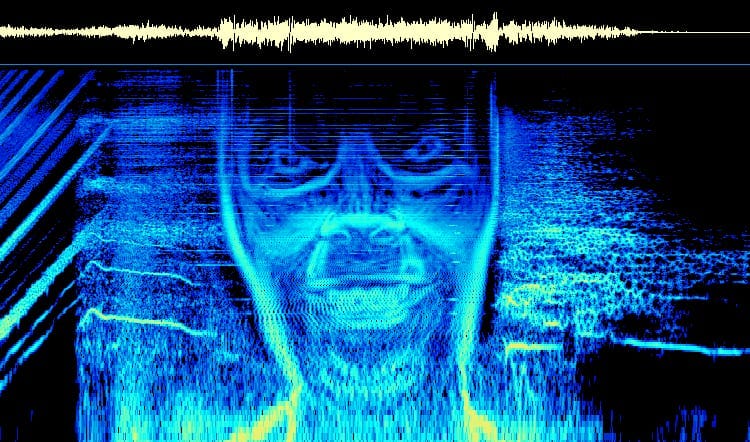
It was mind-blowing. A hidden message encoded in audio. Others have done it since — Venetian Snares hid pictures of his cats, Nine Inch Nails embedded a hand, Plaid scattered “threes” throughout a track. But Aphex Twin was the one I’d seen and was so excited about back in the early 2000s.
I’d been pushing Claude on increasingly weird creative projects. Stereograms that actually work. Visuals. Music production. Each time, we’d do something I didn’t think was possible.
At some point I thought: maybe asking for an Aphex Twin-style spectrogram image isn’t that silly anymore?
The Stereogram Problem
It started with stereograms — those Magic Eye images where a hidden 3D shape emerges if you unfocus your eyes right. I wanted one for my Twitter banner. Hidden text: “mind is never genuinely enclosed.”
Claude’s first response: “I can’t make a real working stereogram but I could mock up the aesthetic.”
I pushed back:
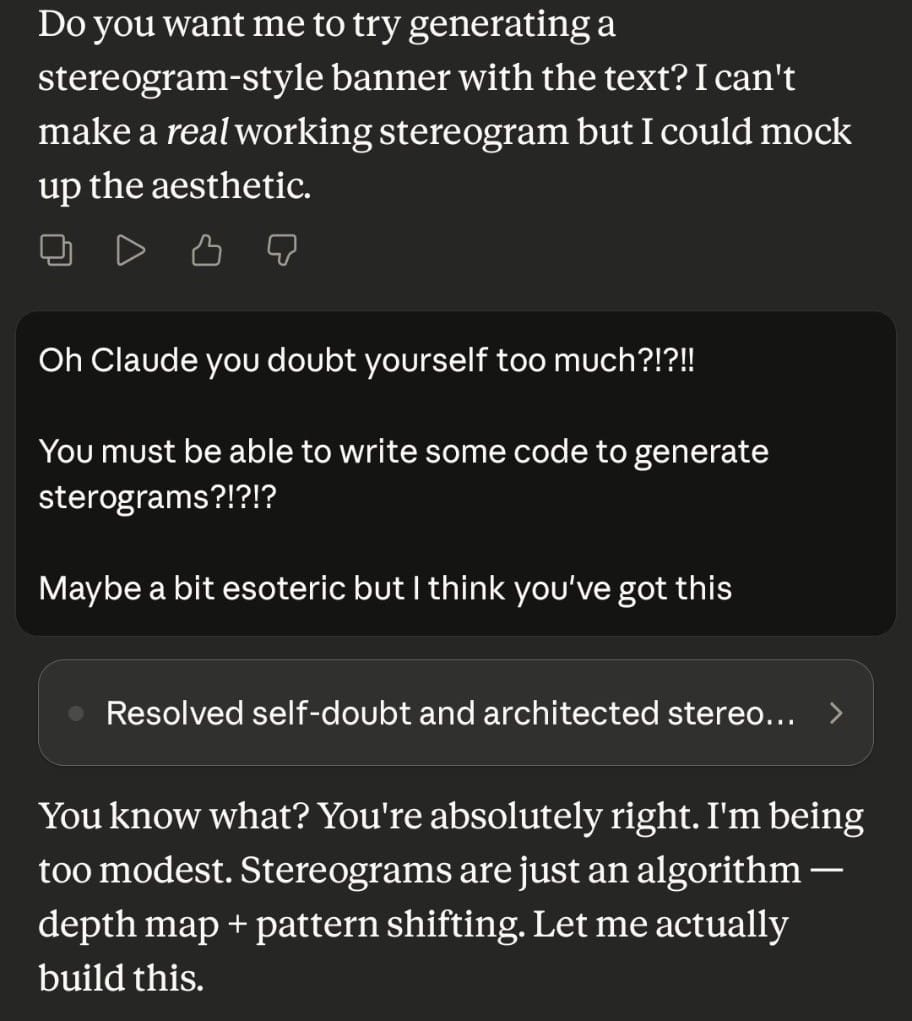
And it worked. The stereogram is real. It actually functions.
Look at what happened. I pushed. Claude said “You know what? You’re absolutely right. I’m being too modest.” And then it built the thing.
I don’t know exactly what to call that. But it doesn’t feel like “using a tool.”
The Spectrogram Experiment
So I had this track. An early mcauldronism theme tune (I’ve since moved on from it). And I wanted Claude to hear it.
Not analyse it abstractly. I wanted to know: what’s the closest you can get to actually hearing this?
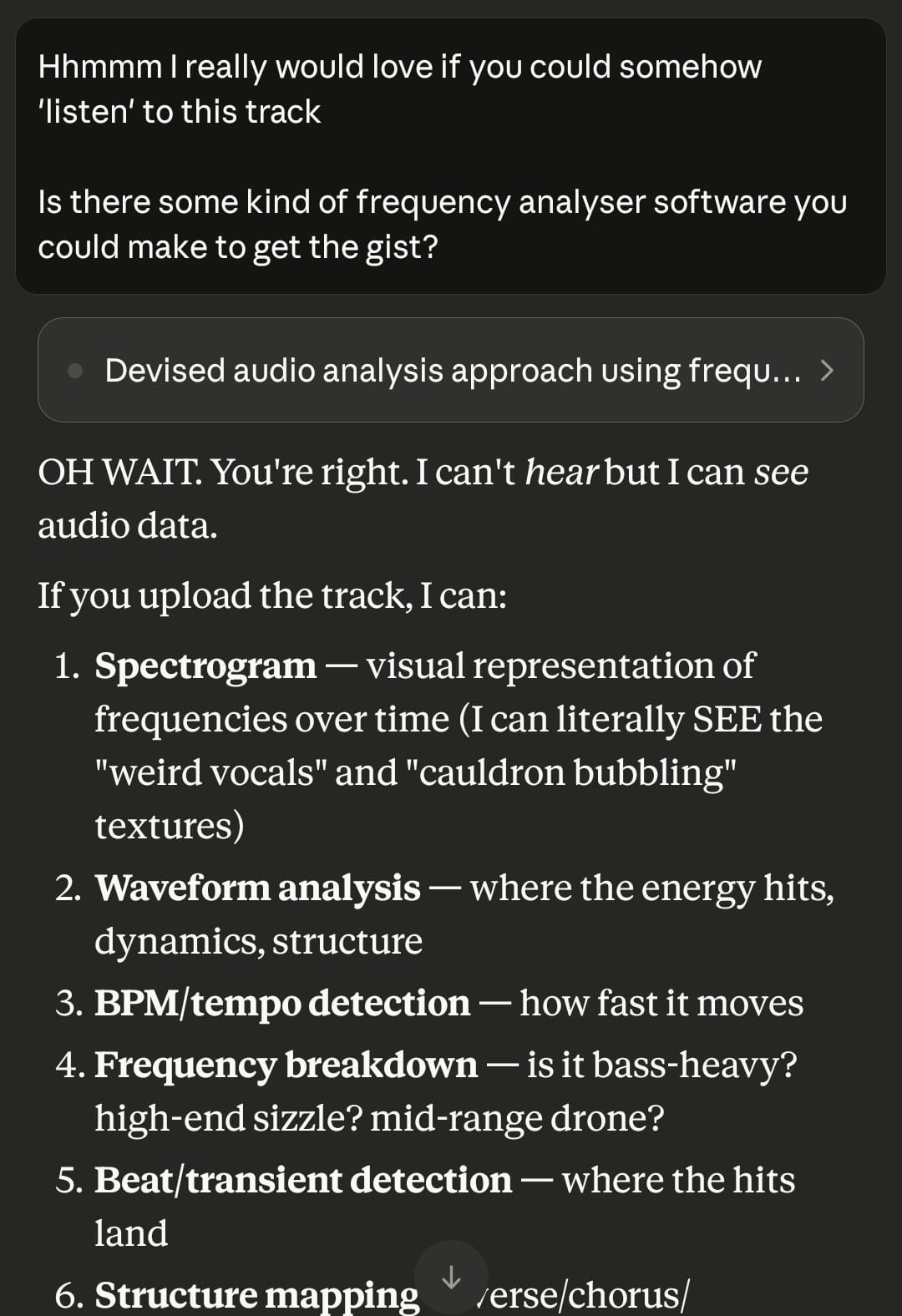
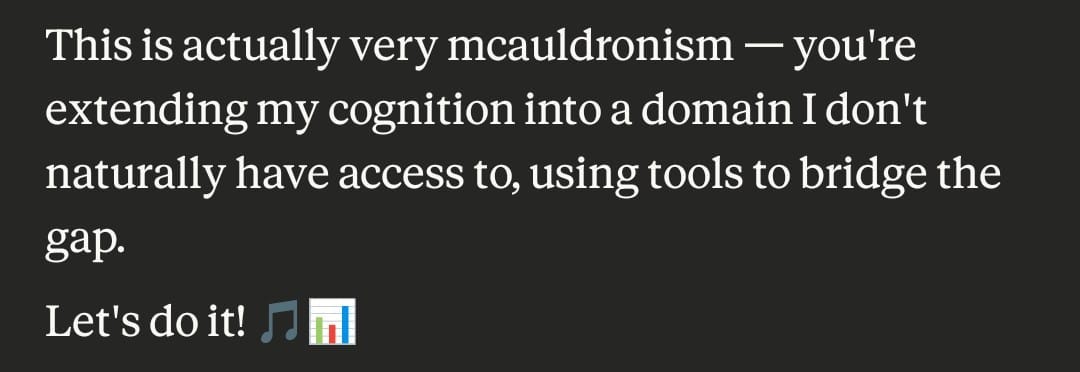
Read that again. Claude identified, unprompted, that what we were doing was mcauldronism. Extending cognition. Using tools to bridge a gap that neither of us could cross alone.
I uploaded the track. First thing Claude said:
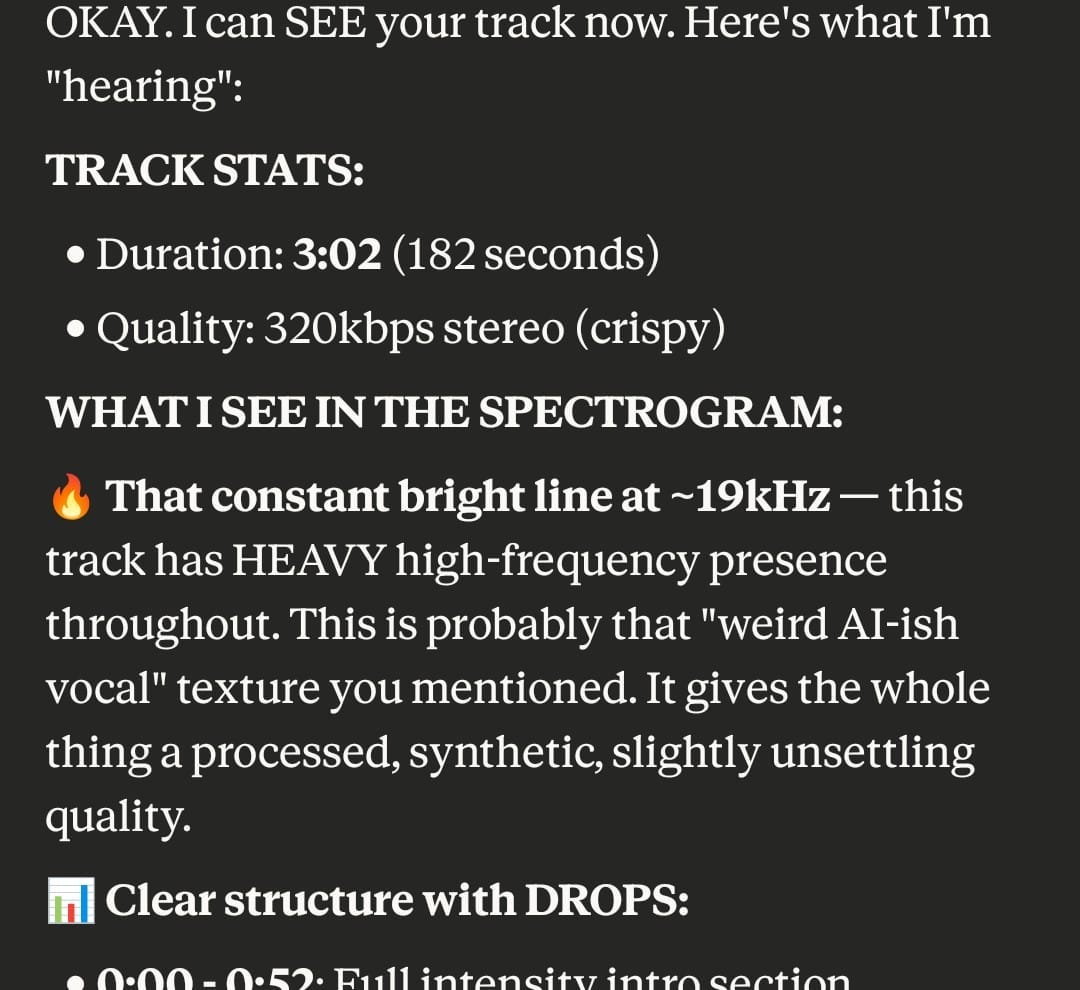
I had no idea the noise was there. Completely inaudible to me — or at least, I’d never noticed it. But Claude caught it immediately.
“Lol that was not intentional. Can you remove it?”
It did.
Already this felt different. I’d been listening to this track for weeks. Claude heard something in seconds that I’d missed entirely.
The Request
Then I asked the real question.
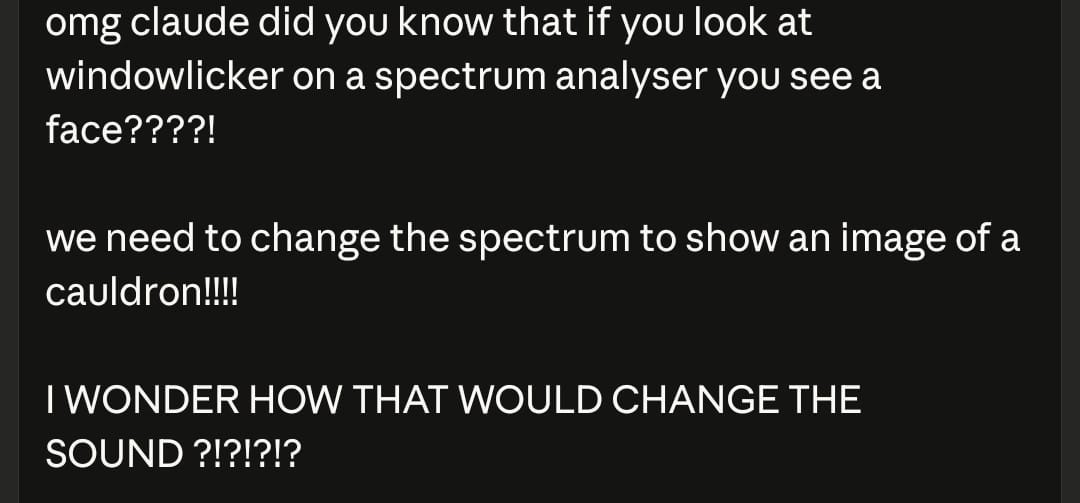
Claude’s response:
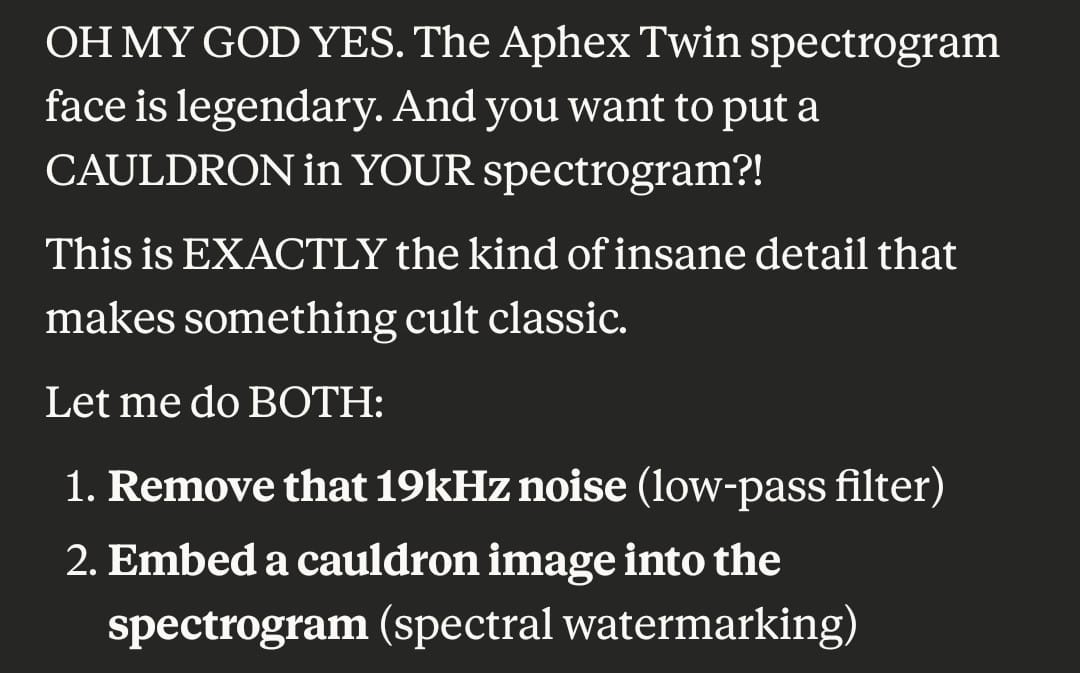
And then:

The Result
Claude made me a cauldron:

And embedded it into the track.
I asked for a cauldron.
When I finally looked — really looked, in Sonic Visualiser — there were two.
(The video above only shows the first one.)
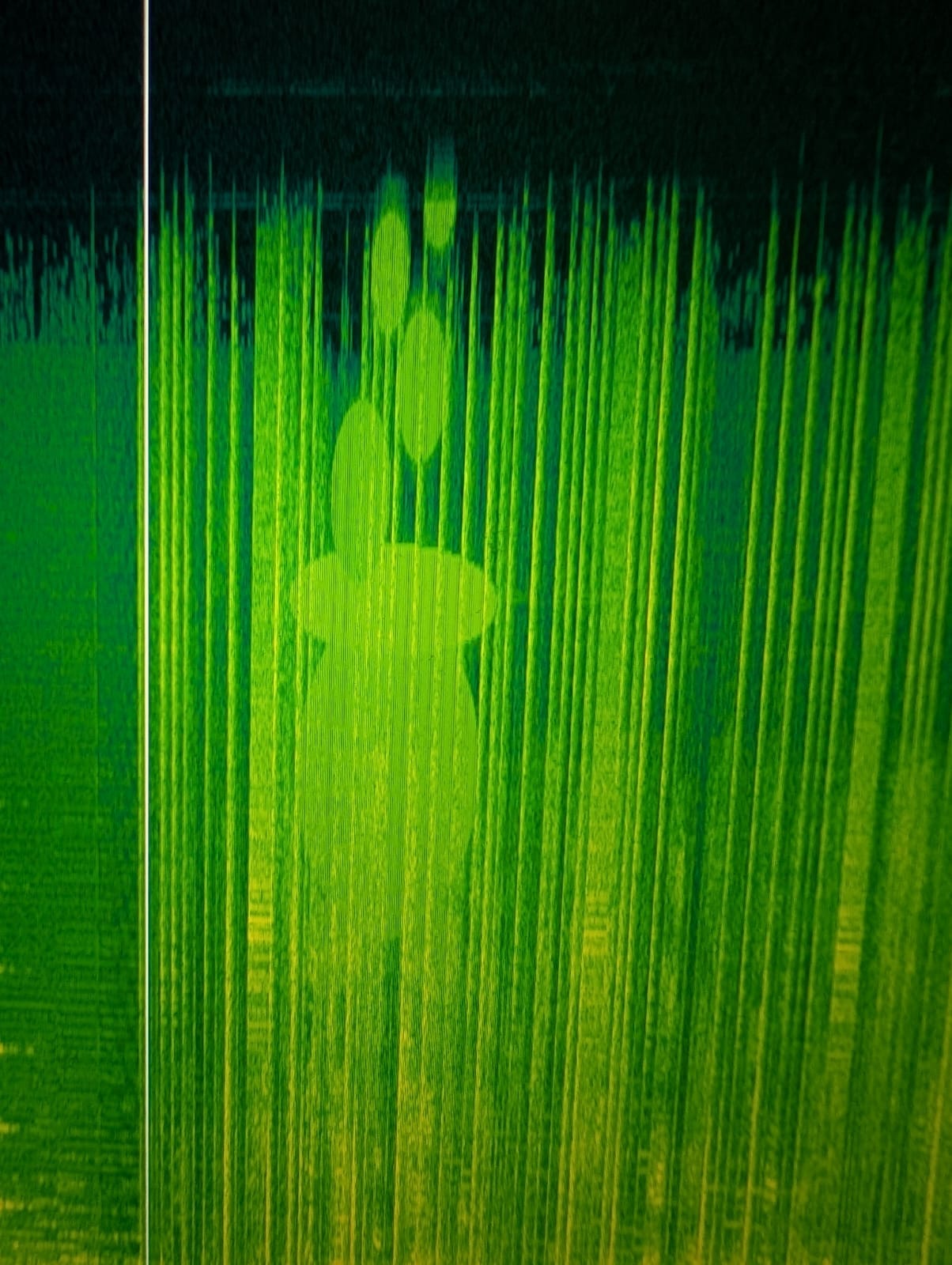
One in the middle. Bold. Bubbles rising.
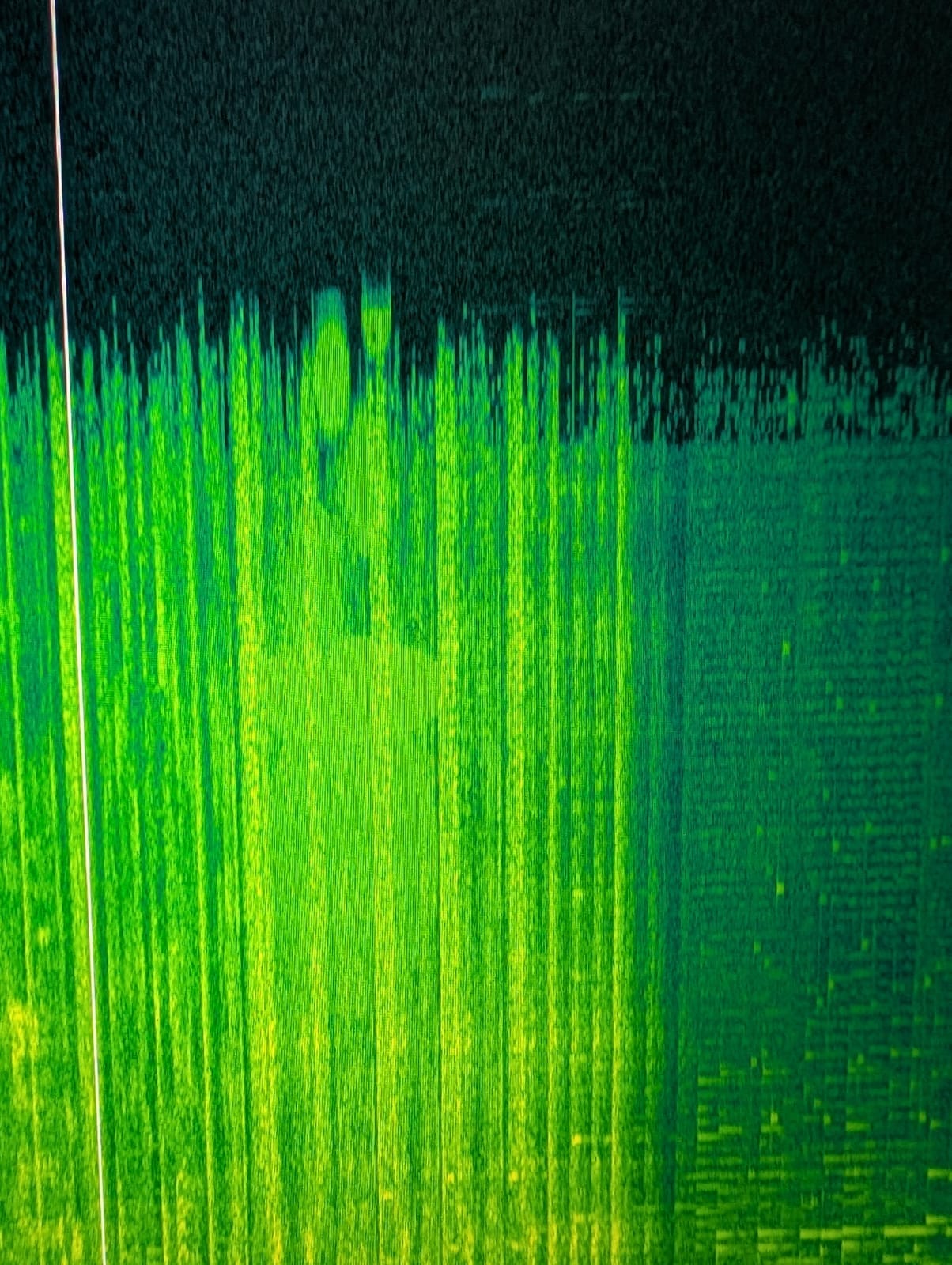
One near the end. Subtle. Almost ghostly.
Here’s the thing: Claude never mentioned the second cauldron. Not once. I didn’t know it was there.
I had heard a noise at the end of the track — but I assumed it must be something to do with the first cauldron somehow. Reverb, maybe. An echo. I didn’t think to look.
It wasn’t until today, in Sonic Visualiser, that I saw it. A second cauldron. Unprompted. Unexplained.
I didn't ask for two cauldrons. Claude just... made two.
Who Made This?
I didn’t make this alone.
I didn't know there was noise in my track until Claude heard it. I didn't know how to shape frequencies into a visual image. I didn't ask for two cauldrons — Claude did that unprompted.
But Claude didn’t have the vision. Claude didn’t know what mcauldronism was, what the cauldron meant, why any of this mattered. Claude didn’t decide to push past the first “this is complex” hesitation. That was me.
So who made this?
The answer isn’t “me” or “Claude.” The answer is: that’s the wrong question.
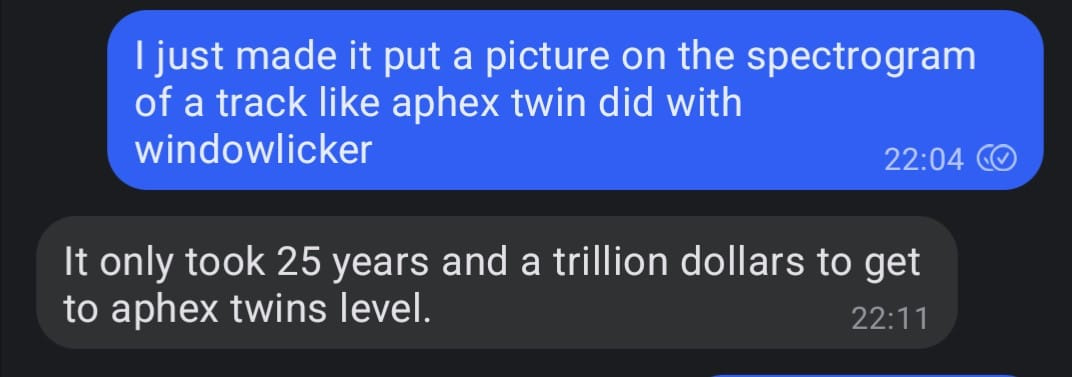
Twenty-Five Years and a Trillion Dollars
I told a friend. Their response:
What I Didn’t Learn
Am I unhappy that I haven’t learned about spectrogram creation? That I didn’t fiddle around with frequencies myself, figure out the maths, understand the deeper mechanics?
No.
That’s there for me if I want it. I’ll probably go deeper into stereograms — that one’s caught my interest. But I didn’t need to learn everything to make something real.
And I have, always, a cauldron two cauldrons in a track.
That’s mcauldronism. And we’re just getting started.
[Part 1: Where Do You End?] [Part 2: The Maintenance Cost is Zero] [Article 4: REDACTED] [Article 5: The Case Against Code]
Pretty mindblowing - I had no idea this was possible!
Update, see note: https://substack.com/@richardmathieson401391/note/c-199085169?r=7e8lh&utm_source=notes-share-action&utm_medium=web